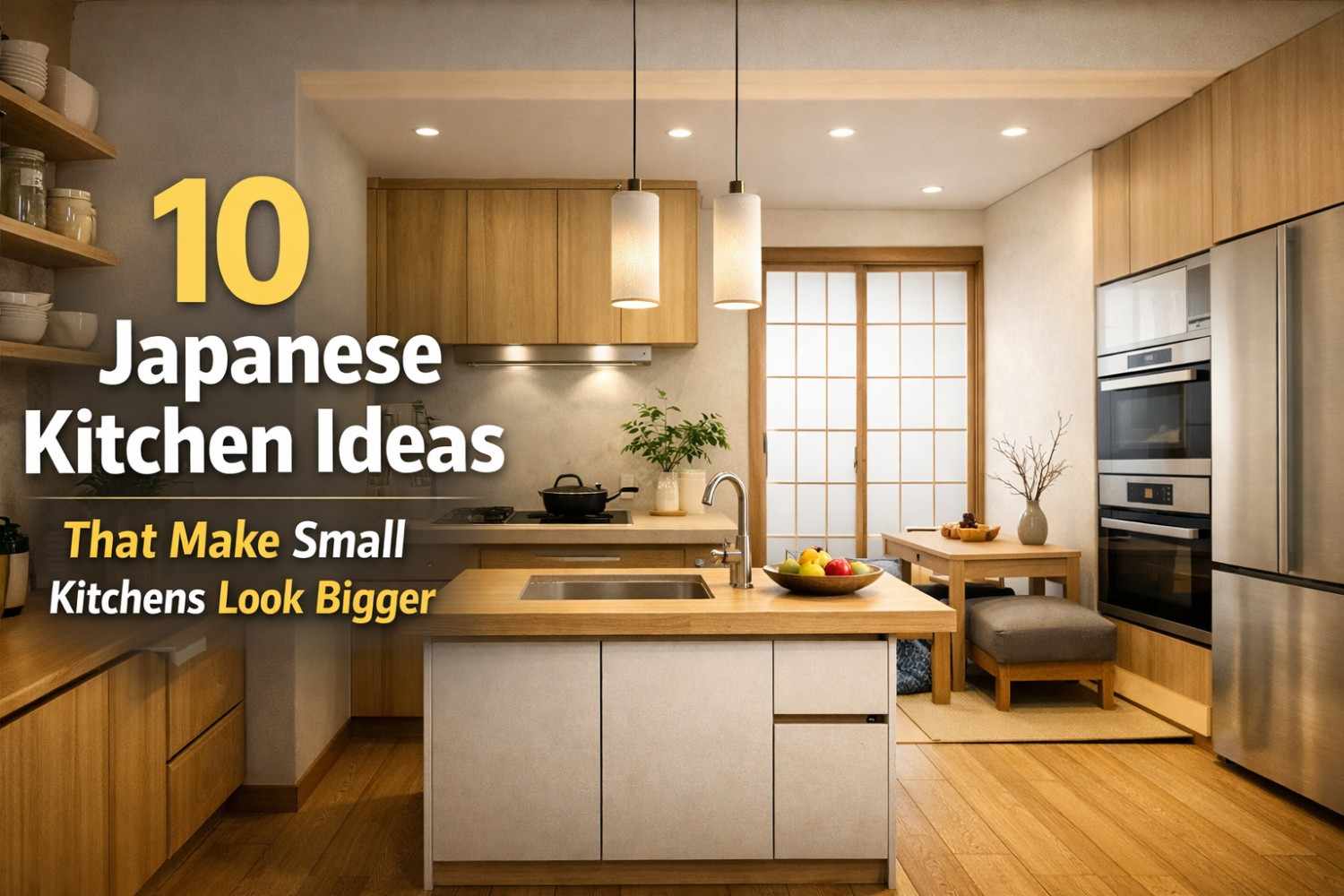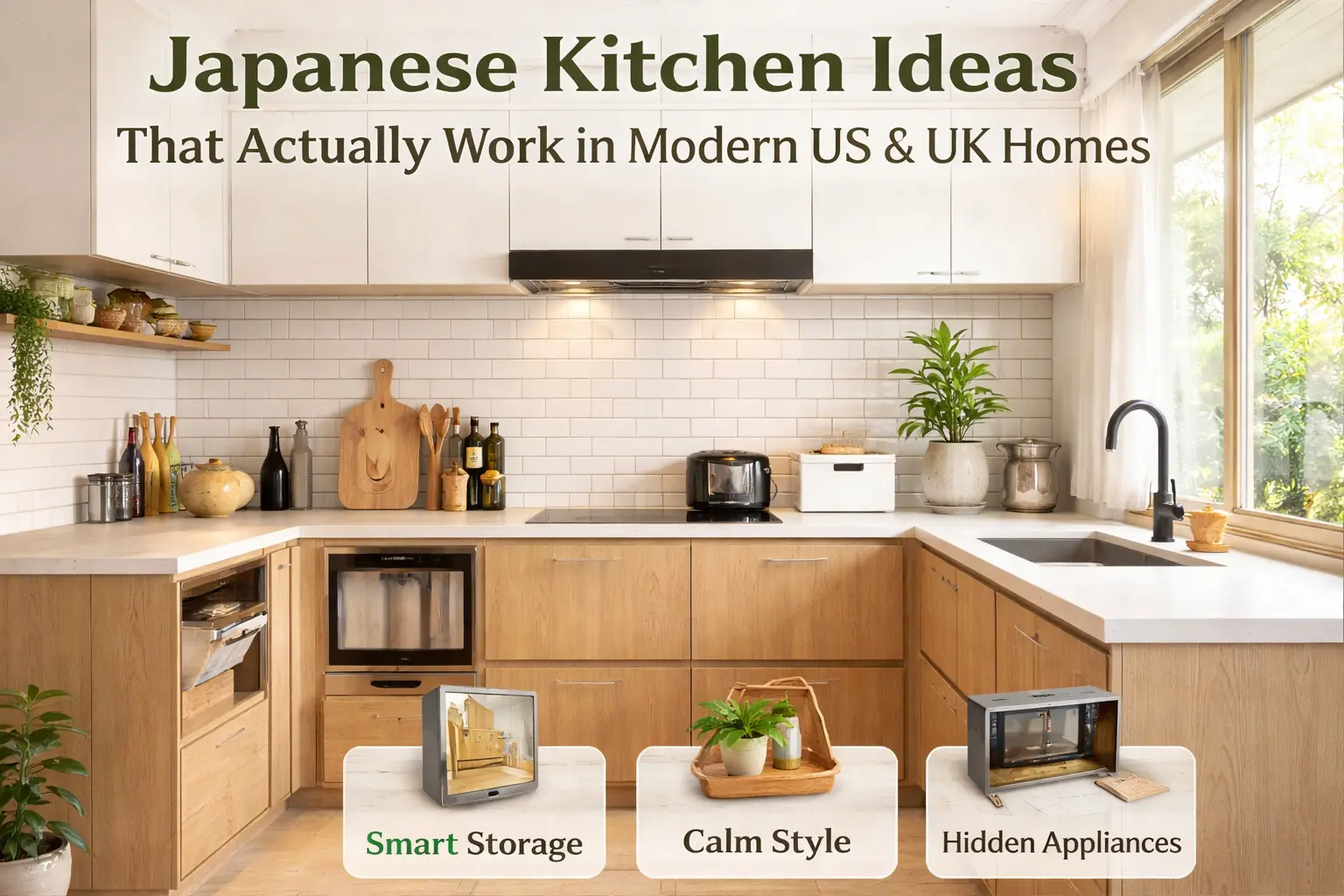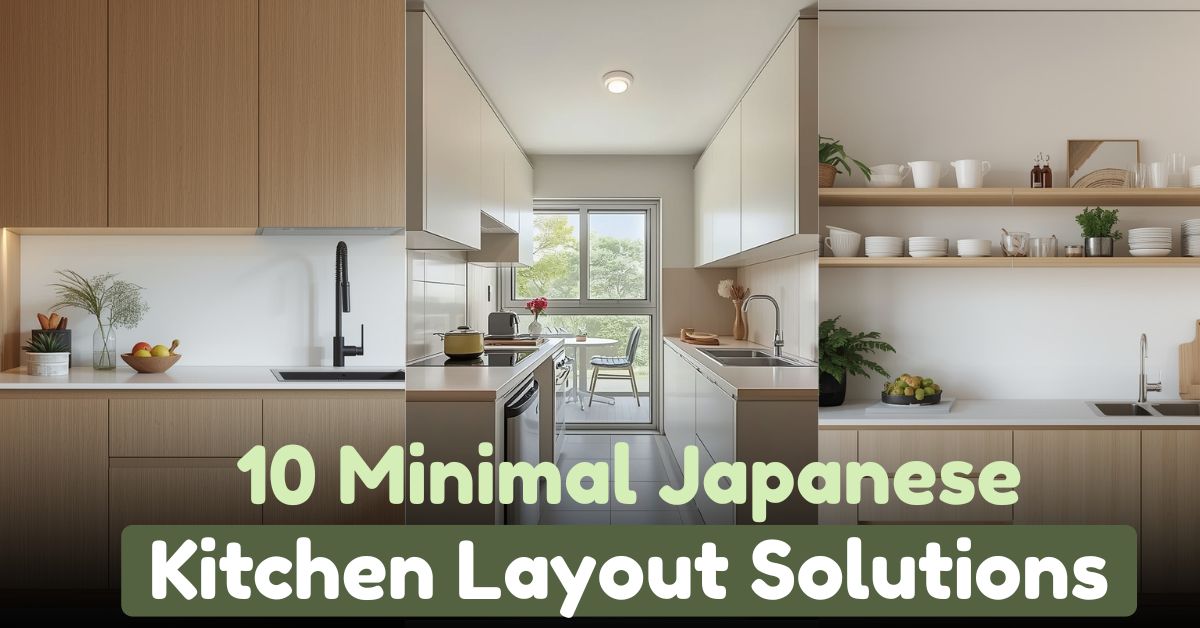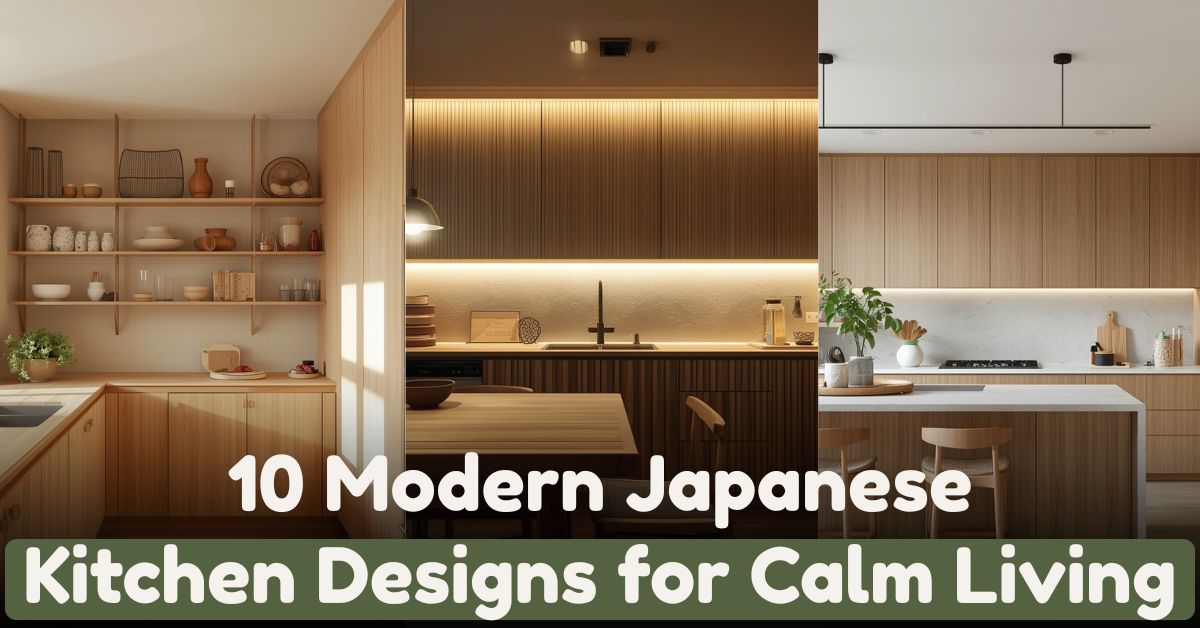
Japanese Kitchen Ideas: If you’ve ever walked into a space and instantly felt calm, chances are it wasn’t crowded or overly decorated. That’s exactly what draws people toward Japanese kitchen ideas. They’re not flashy. They’re not loud. But they feel peaceful, organized, and intentional.
I started paying attention to Japanese-style kitchens when I realized something: the kitchens that felt easiest to cook in weren’t the biggest ones. They were the ones where everything had a place.
If your kitchen feels tight, messy, or visually overwhelming, these ideas can genuinely help — even if you’re not renovating.
1. Clear the Counters First — Before Buying Anything
Most people start by looking for shelves, racks, or storage boxes. I suggest doing the opposite.
Clear everything off your countertops.
When I first tried this, I was surprised at how much calmer the space felt. Only put back what you use daily — maybe a kettle, a cutting board, or a salt jar.
Japanese kitchens don’t feel spacious because they’re large. They feel spacious because surfaces are open.
If something doesn’t need to be visible, store it.
2. Stop Storing Things “Just in Case”
This one is hard. We all keep extra mugs, duplicate utensils, or appliances we barely use.
But Japanese design follows a practical mindset: keep what serves you regularly.
Go through one drawer at a time. If you haven’t used something in six months, question why it’s there.
When cabinets aren’t stuffed, finding things becomes easier. Cooking becomes smoother. Stress reduces without you even realizing it.
3. Bring in Natural Materials — Even in Small Ways
You don’t need a full wooden kitchen to create warmth.
Start small:
Replace plastic trays with wooden ones.
Use a bamboo spoon instead of metal for serving.
Add a wooden cutting board and leave it out.
Natural materials soften the space. They don’t reflect harsh light. They make the kitchen feel lived-in but not messy.
I’ve noticed that even one wooden element can change the mood of the room.
Read This Also: Holi Party Ideas 2026 – Creative & Easy Celebration Setup
4. Choose Soft, Calm Colors
Bright cabinets and bold backsplashes might look exciting online, but they can feel overwhelming in everyday life.
Japanese kitchens usually stick to light tones — white, beige, soft grey, light wood.
If repainting isn’t possible, you can still adjust the feel:
Use neutral dish towels.
Switch to simple ceramic containers.
Avoid mixing too many colors on open shelves.
Calm colors make the kitchen feel larger and easier on the eyes.
5. Organize Based on How You Cook
This is where most kitchens go wrong. Things are stored randomly instead of logically.
Think about your routine.
If you cook rice daily, the rice cooker shouldn’t be hidden behind five other appliances. If you use the same pan every day, it should be easy to grab.
Try this simple system:
Keep daily items at waist height.
Store rarely used items higher up.
Use drawer dividers so utensils don’t pile up.
When everything flows with your routine, cooking feels effortless.
6. Be Careful With Open Shelves
Open shelving can look beautiful — but only if it’s controlled.
I’ve seen open shelves turn into storage overflow zones. The Japanese approach is selective.
Display only a few matching bowls, tea cups, or a small plant. Leave space between items.
Empty space isn’t wasted space. It gives your eyes room to rest.
Read This Also: Bedroom Ideas for Adults: Smart, Stylish & Practical Designs
7. Use Warm Lighting — It Changes Everything
Lighting is often ignored, but it makes a huge difference.
Harsh white lights can make even a clean kitchen feel cold. Warm lighting, on the other hand, creates comfort.
If possible:
Add under-cabinet lights.
Use warm LED bulbs.
Avoid heavy curtains blocking natural light.
A softly lit kitchen feels more inviting at night.
8. Add a Small Eating Corner (If Space Allows)
In many Japanese homes, the kitchen connects naturally with a small dining area.
You don’t need much:
A narrow wooden counter with two stools.
A small square table.
Even a foldable table near a window.
The goal isn’t luxury — it’s connection. Cooking and eating should feel part of the same space.
Read This Also: Why Nashik Kumbh Mela Is Held? History & Spiritual Meaning Explained
9. Avoid Overdecorating
One mistake I see often is adding too many “aesthetic” items.
Japanese kitchen ideas work because they are restrained. A single plant is enough. A few well-chosen tools are enough.
More décor doesn’t equal more beauty. Sometimes it just equals more dust.
10. Focus on Quality, Not Quantity
Instead of buying five cheap pans, buy one good one. Instead of collecting multiple knives, invest in one reliable knife.
Better tools last longer and reduce clutter.
When your kitchen isn’t overflowing with extras, maintaining it becomes easier.
Simple Checklist You Can Follow Today
- Remove everything from countertops
- Keep only daily-use items visible
- Donate or store duplicate utensils
- Add one natural material (wood, bamboo, linen)
- Switch to warm lighting
- Organize drawers with dividers
- Limit visible décor to 3–5 items
- Even completing half of this will change how your kitchen feels.
Final Thoughts
Japanese kitchen ideas aren’t about copying a specific style. They’re about creating a space that supports your daily life.
When a kitchen is calm and organized, cooking feels lighter. Cleaning feels easier. Even quick meals become less stressful.
You don’t need a renovation. You need intention.
Start small. Make thoughtful changes. Over time, your kitchen will naturally begin to feel peaceful — not because it’s perfect, but because it works for you.
FAQs
1. What are Japanese Kitchen Ideas?
Japanese Kitchen Ideas focus on minimal, clean and functional kitchen design. They use natural materials, soft colors and smart storage to create a calm and organized cooking space.
2. Are Japanese Kitchen Ideas suitable for small kitchens?
Yes, Japanese Kitchen Ideas are perfect for small spaces. They emphasize decluttering, vertical storage and efficient layout planning to make compact kitchens feel spacious.
3. What colors are used in Japanese Kitchen Ideas?
Japanese Kitchen Ideas typically use white, beige, light grey and natural wood tones. These colors help reflect light and create a peaceful atmosphere.
4. How can I organize my kitchen using Japanese Kitchen Ideas?
You can organize your kitchen by clearing countertops, using drawer dividers, storing rarely used items higher and keeping daily-use tools easily accessible.
5. Do Japanese Kitchen Ideas require expensive renovation?
No, Japanese Kitchen Ideas can be implemented without renovation. Simple changes like decluttering, improving lighting and adding wooden elements can transform your space.