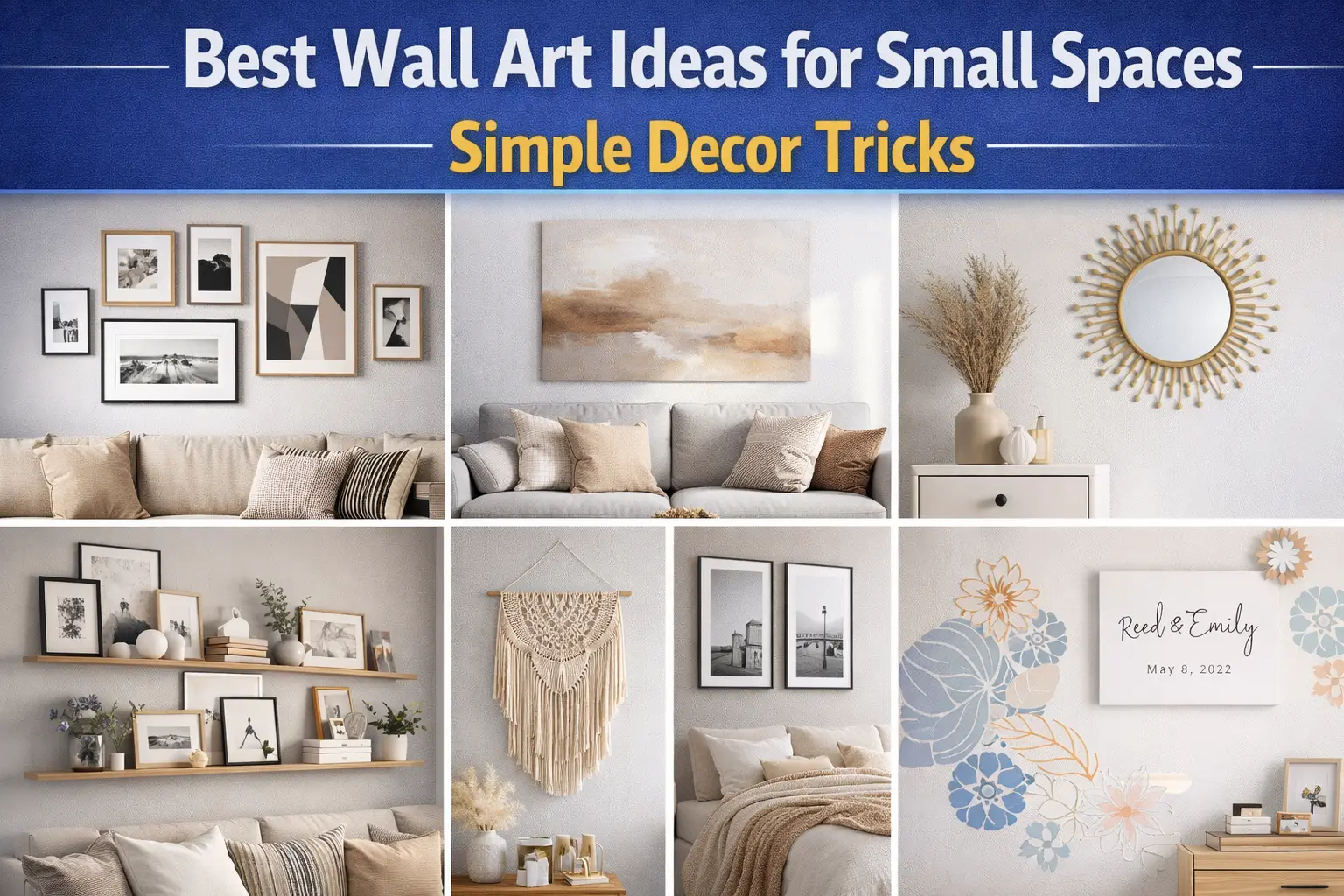
Best Wall Art Ideas: Small rooms have a weird problem- one empty wall can make the whole space feel unfinished, but the moment you start “decorating,” it can look crowded fast. I’ve helped friends set up compact bedrooms, rental apartments, dorm corners, and even tiny home offices—and the pattern is always the same. The art isn’t the issue. Placement, scale, and restraint are.
This guide is for anyone in India, the US, or the UK who wants wall art that adds personality without shrinking the room. I’ll walk you through what works in real homes, why it works, and how to choose the right approach based on your wall size, furniture, and light.
Read This Also: Small Bathroom Ideas 2026: Tiny Space Makeover That Feels Big
Before buying frames or printing photos, take 60 seconds and pick the wall’s “job”:
-
Make the room feel wider
-
Make the ceiling feel higher
-
Add warmth and personality
-
Reflect more light
-
Create a focal point behind a bed/sofa/desk
Once you choose the job, the art choices become easier—and you avoid the classic mistake of mixing too many ideas on one wall.
1) Create a gallery wall, but keep it tight
A compact gallery wall can replace one oversized artwork and still feel intentional. In small spaces, the trick is tight control.
What works best when space is limited
-
6–10 small frames instead of a few large ones
-
One theme (black & white, sepia, neutrals, or a single accent color)
-
Consistent spacing (your eye notices messy gaps immediately)
Why it works
When the frames are similar in style and spacing, your eye moves across the set smoothly. That movement makes the wall feel wider and more dynamic, without the chaos of mismatched sizes.
Practical setup tip I use
Lay everything on the floor first. Take a photo. Adjust until it looks balanced. Then transfer the layout to the wall using paper templates or painter’s tape.
Read This Also: What Is Simhastha Kumbh? History, Meaning & Spiritual Significance Explained
2) Use one large statement piece (one piece only)
This sounds counterintuitive, but in a tight room, one bold piece often looks cleaner than multiple small items. The wall reads as “finished” with less visual noise.
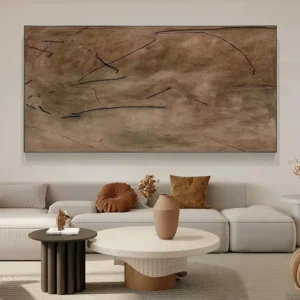
Best choices for small rooms
-
Abstract art (it doesn’t “crowd” the mind with detail)
-
Soft landscapes
-
Minimal palettes (fewer colors = calmer room)
Make it look expensive, not heavy
Hang at eye level and avoid thick, bulky frames. A thin frame or canvas-style finish usually looks lighter.
3) Use vertical art to make ceilings feel higher
If your room feels short or boxy, go vertical. Tall pieces pull attention upward and can make the ceiling feel higher than it is.
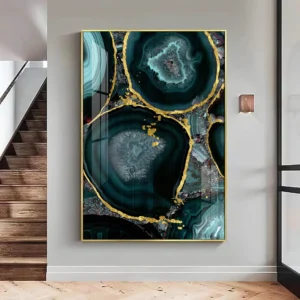
Where vertical art works best
-
Beside beds (especially if you don’t have a headboard wall feature)
-
Narrow hallway walls
-
Between windows
-
Next to a wardrobe or tall bookshelf
Quick styling win
Two slim vertical frames stacked one above the other can work even better than one tall frame—provided spacing stays consistent.
4) Use mirrors as wall art
When a room lacks natural light or feels tight, a mirror is one of the easiest fixes. It’s decor that actually changes how the room feels.
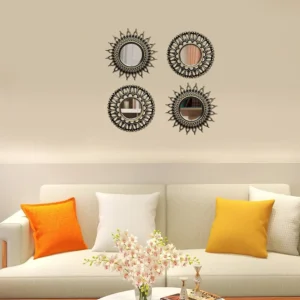
Great mirror styles for small spaces
-
Round mirrors (soften sharp corners)
-
Sunburst mirrors (adds texture without taking much space)
-
Clustered small mirrors (like a mini gallery wall)
Placement that actually matters
Put mirrors where they reflect something useful—light from a window, a lamp, or an open hallway—not a cluttered shelf.
5) Add floating shelves and “lean” your art
If you hate drilling, want flexibility, or change your mind often, shelves are your best friend.
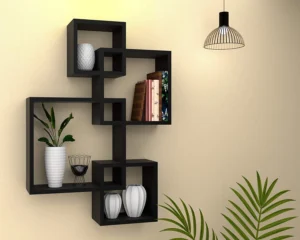
What to place on shelves
-
Small framed prints (lean them against the wall)
-
Mini plants (one is enough)
-
Candles or small decor objects
-
A couple of books stacked horizontally
Why this works in real life
You can rotate art seasonally, switch prints, or add personal items without turning the wall into a hole-filled mess.
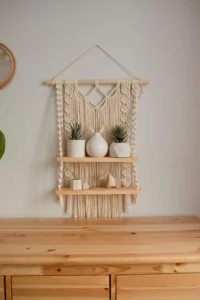
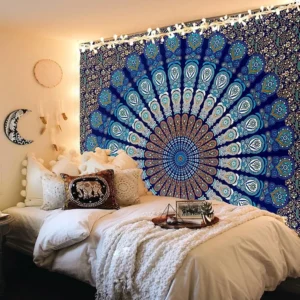
6) Try a tapestry or fabric wall hanging
Textiles add warmth without the “hard” look of frames. They’re also easier to live with in rentals and dorm rooms.
Perfect for
-
Bedrooms
-
Cozy reading corners
-
Dorm rooms or PG rooms
Pick one with a calm pattern and avoid loud, busy prints if the room is already full of furniture.
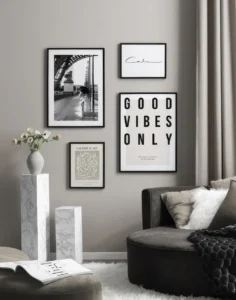
7) Use black-and-white photography sets
When people want a “clean” look but don’t know where to start, I usually suggest black-and-white photos. They’re calm, timeless, and they don’t fight your furniture colors.
Themes that work well
-
Cityscapes (great for modern homes)
-
Nature (works in almost any room)
-
Architecture (clean lines look sharp)
-
Portraits (useful for personal spaces)
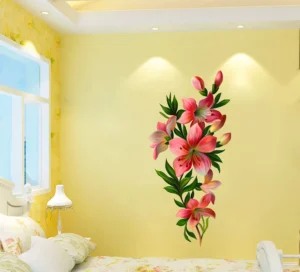
8) Wall decals or murals for renters
If you can’t drill or don’t want to invest in frames yet, decals give instant impact.
Best styles for small rooms
-
Florals (soft and welcoming)
-
Minimal line art
-
Light geometric shapes
Keep it simple. In small spaces, a decal should feel like a design choice, not wallpaper.
9) Add round or organic-shaped art
Most small rooms already have rectangles everywhere—doors, cupboards, windows, beds. Curves help the room feel softer and less cramped.
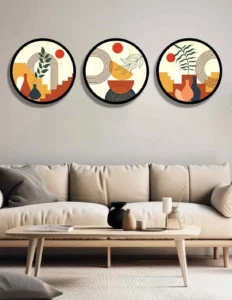
Try
-
Round metal art
-
Circular prints
-
Wavy wood pieces
Use one or two curved elements only. Too many shapes can look messy.
10) Personalized wall art that doesn’t look cheesy
Personalized art can be beautiful if it’s subtle.
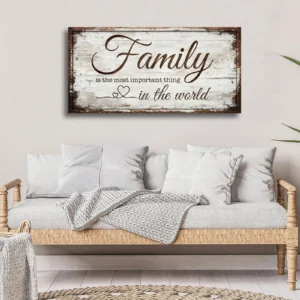
Ideas that work
-
Initials in a minimal font
-
A short quote that actually matters to you
-
An important date (wedding, graduation, first home)
-
A custom illustration of your city, pet, or family
Keep it small, keep it clean, and give it breathing space.
A simple “Small Space Wall Art” workflow
When I’m styling a small room, I follow this order:
-
Measure the wall (width and height)
-
Choose the wall’s job (wider / taller / brighter / focal point)
-
Pick one approach: gallery wall or statement art or mirror
-
Decide a color rule: monochrome, neutrals, or one accent color
-
Test layout using tape/paper before drilling
-
Step back, view from the doorway, and remove one item if it feels busy
Quick placement checklist (copy this)
-
Keep the main art at eye level
-
Leave breathing space around each piece
-
Stick to one main color theme
-
Avoid overcrowding near switches, doors, and corners
-
If it looks “almost right,” remove one piece first
Common mistakes I see (and easy fixes)
Mistake: Too many tiny frames scattered around
Fix: Group them into one compact gallery wall.
Mistake: Hanging art too high
Fix: Bring it down—most people place art 4–8 inches higher than it should be.
Mistake: Using heavy frames in a small room
Fix: Switch to thinner frames or frameless prints.
Mistake: Mixing too many colors and styles
Fix: Choose one theme (monochrome or neutrals) and repeat it.
Mistake: Mirrors reflecting clutter
Fix: Shift the mirror so it reflects light or open space instead.
FAQS
Q1. What are the best wall art ideas for small spaces?
Best Wall Art Ideas for Small Spaces include gallery walls, statement art, mirrors, and vertical frames.
Q2. How many frames should I use in a small room?
Best Wall Art Ideas for Small Spaces suggest using 6–10 small frames.
Q3. Which art style suits small rooms?
Abstract and black-and-white art works best.
Q4. Do mirrors make small rooms look bigger?
Yes, mirrors reflect light and add depth.
Q5. What wall art is good for rented rooms?
Wall decals, fabric hangings, and floating shelves.