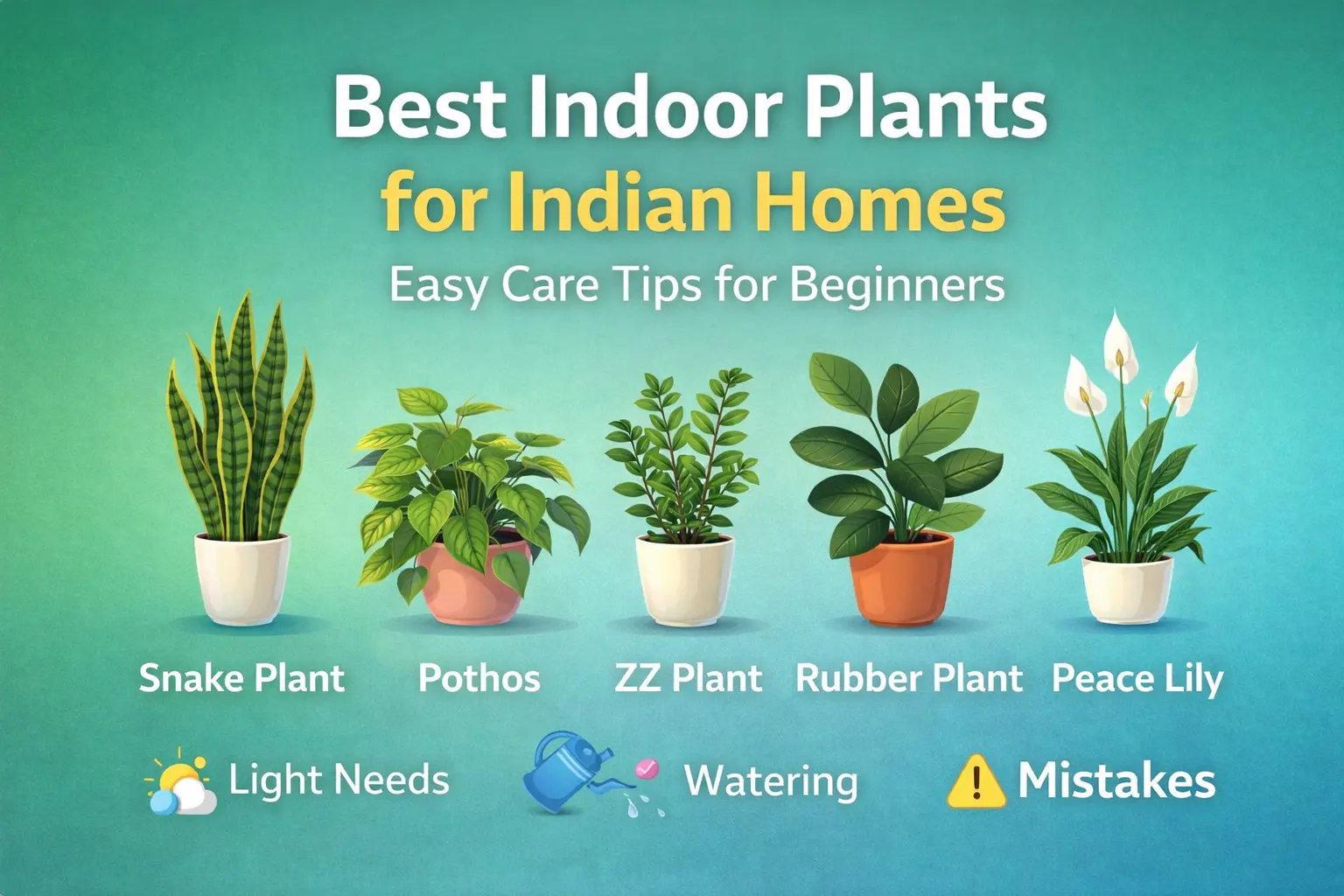
Best Indoor Plants for Indian Homes: If you’re in the India or US, UK and you’ve tried buying “easy” houseplants only to watch them drop leaves, attract gnats, or slowly fade in a corner—you’re not alone. Indian homes (and Indian-style apartments) often have a unique mix of bright but indirect light, warm kitchens, dry AC rooms, and occasional humidity spikes. The good news: a handful of plants thrive in exactly these conditions, and they don’t require you to become a full-time plant parent.
I’m sharing what has worked for me and for friends who keep plants alive in real homes—not Instagram studios. The goal is simple: pick the right plant for your light, then follow a routine that prevents the most common mistakes.
Step 1: Match the plant to your light (this matters more than watering)
Before you buy anything, stand where you want the plant and ask:
-
Is it right next to a bright window (lots of indirect light)?
-
Is it a few feet away (medium light)?
-
Is it a hallway or corner (low light)?
Most “easy” plants die because we put a sun-lover in a dark spot or drown a low-light plant trying to “help” it.
Step 2: Choose plants that suit Indian home conditions
Here are my reliable picks (and why they work):
1) Snake Plant (Sansevieria)
Why it’s great: Handles low light, forgetful watering, and dry air.
Care: Water only when the soil is dry through most of the pot. Too much water is the only real way to kill it.
2) Pothos (Money Plant)
Why it’s great: Fast-growing, forgiving, and looks good trailing from shelves.
Care: Water when the top inch of soil is dry. Trim leggy vines; it grows back fuller.
3) ZZ Plant
Why it’s great: Tough, slow-growing, and fine in low to medium light.
Care: Water sparingly. If you’re unsure, wait a few days—ZZ prefers dryness.
4) Peace Lily
Why it’s great: A “thirst indicator” plant—leaves droop when it needs water.
Care: Keep soil lightly moist, not soggy. Likes medium light. Too much sun can scorch leaves.
5) Areca Palm
Why it’s great: Adds a lush, airy look and does well in bright, indirect light.
Care: Likes consistent moisture but hates sitting in water. Good drainage is key.
6) Rubber Plant (Ficus elastica)
Why it’s great: Strong statement plant; grows well near bright windows.
Care: Water when top 2 inches are dry. Wipe leaves monthly so they can “breathe.”
7) Aloe Vera (for sunny windowsills)
Why it’s great: Loves sun and needs little water.
Care: Let soil dry completely. Use a gritty, fast-draining mix.
Plant, Light, Water (Save this)
| Plant | Best Light | Water Rule | Common Mistake |
|---|---|---|---|
| Snake Plant | Low–Medium | Only when very dry | Overwatering |
| Pothos | Medium–Bright indirect | When top inch dry | Keeping in deep shade |
| ZZ Plant | Low–Medium | When fully dry | “Weekly watering” habit |
| Peace Lily | Medium | When it droops / top dry | Too much sun |
| Areca Palm | Bright indirect | Keep lightly moist | Poor drainage |
| Rubber Plant | Bright indirect | Top 2 inches dry | Dusty leaves, low light |
| Aloe Vera | Bright / some direct sun | Fully dry | Using heavy, wet soil |
Step 3: A simple weekly care routine (my real-life workflow)
Once a week (10 minutes):
-
Pick up the pot. Light pot = likely dry. Heavy pot = hold off.
-
Finger test. Push a finger 1–2 inches into soil (deeper for big pots).
-
Rotate plants a quarter turn so they don’t lean.
-
Check leaves. Dust, yellowing, pests, crispy edges.
Once a month:
-
Wipe large leaves (rubber plant, peace lily).
-
Check drainage holes (water must escape).
Real-world mistakes I see all the time (and fixes)
-
“I water on a schedule.”
Fix: Water based on soil dryness, not a calendar. Seasons and indoor heating/AC change everything. -
“My pot has no drainage hole.”
Fix: Use nursery pots inside decorative planters, or drill drainage. Standing water causes root rot. -
“I repotted into a much bigger pot.”
Fix: Size up gradually. Too-big pots stay wet and rot roots. -
“I put it in the darkest corner because it looks nice there.”
Fix: Use snake plant or ZZ there. Most others need at least medium light.
Takeaway
The “secret” to indoor plants isn’t fancy fertilizer—it’s light + drainage + patience. Start with one or two resilient plants like snake plant or pothos, learn your home’s light, and build from there. Once you stop overwatering and start matching plants to the right spot, keeping a green home becomes surprisingly easy.
FAQs
Q1. What are the best indoor plants for Indian homes?
Answer:
The best indoor plants for Indian homes include snake plant, pothos, ZZ plant, peace lily, and rubber plant. These plants adapt well to indirect light, air-conditioned rooms, and simple care routines.
Q2. Why do indoor plants die easily in Indian homes?
Answer:
Most indoor plants die due to overwatering, poor drainage, or incorrect light placement. Choosing the best indoor plants for Indian homes helps avoid these common beginner mistakes.
Q3. Which indoor plant is best for low light areas?
Answer:
Snake plant and ZZ plant are ideal for low-light areas. They are considered among the best indoor plants for Indian homes because they survive neglect and low sunlight.
Q4. How often should indoor plants be watered?
Answer:
There is no fixed watering schedule. The best indoor plants for Indian homes should be watered only when the soil feels dry, as seasons and indoor temperature affect moisture levels.
Q5. Is direct sunlight bad for indoor plants?
Answer:
Some plants like aloe vera enjoy direct sunlight, but most of the best indoor plants for Indian homes prefer bright indirect light and can get damaged under harsh sun.
Read This Also: Festival Home Decoration Ideas: Holi, Diwali & Christmas Made Simple