Kids Room Decor Ideas: Most kids’ rooms start with good intentions and end up as a mix of toys, random posters, and furniture that doesn’t quite fit. I’ve seen it happen in small UK flats, US suburban bedrooms, and compact Indian apartments—the problem is the same: we decorate for how the room looks, not how a child actually uses it. A creativity-friendly room isn’t about expensive themes. It’s about making space for imagining, building, drawing, reading, and moving—without turning the room into chaos.
This guide is for parents and caregivers in the US, UK, and India who want a room that feels fun, calm, and easy to maintain.
Step 1: Start with “zones,” not a theme
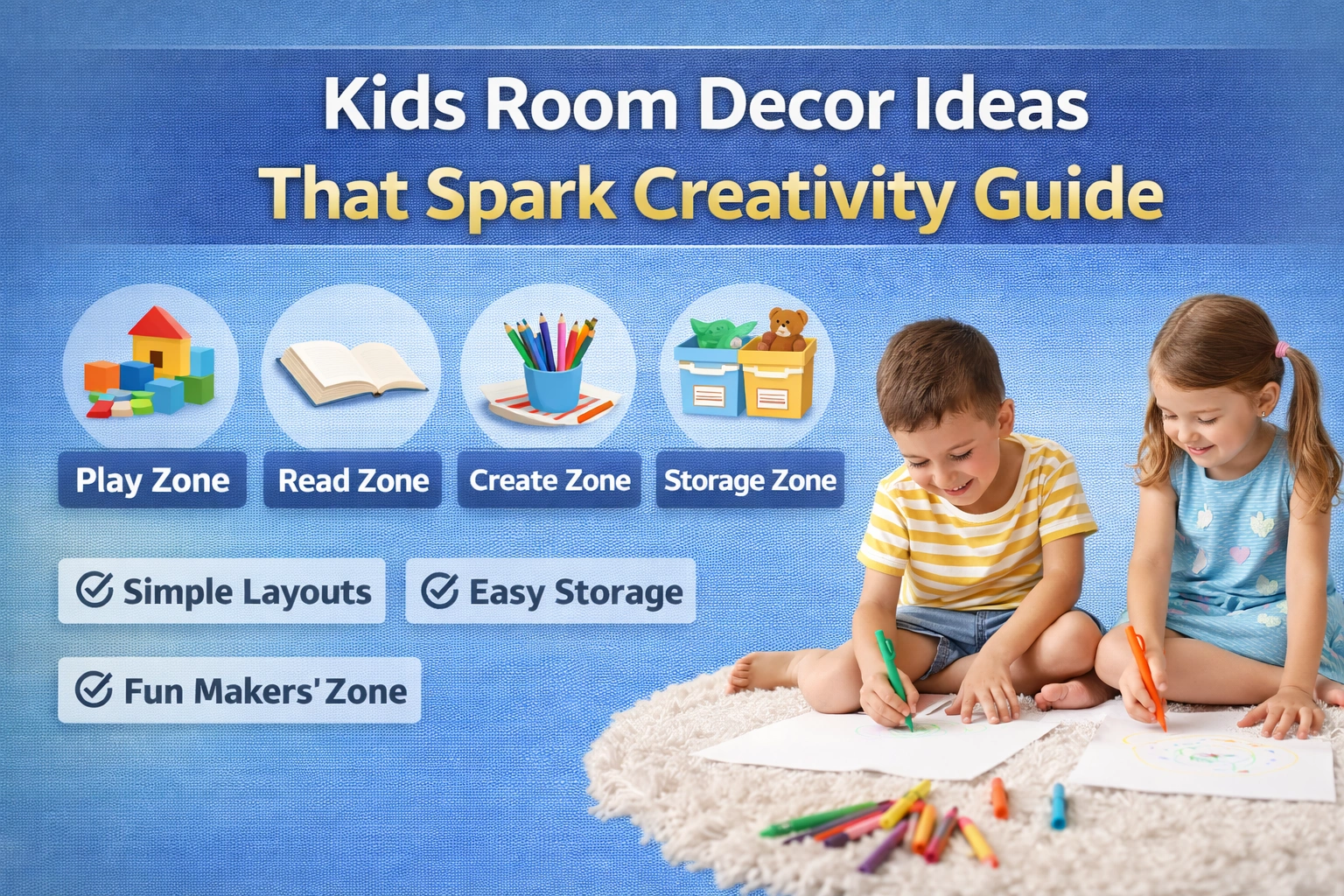
When I plan a kids’ room, I divide it into 3–4 simple zones. This matters because children switch activities quickly, and the room should support that without constant cleanup.
Easy creativity zones:
-
Make Zone: drawing, crafts, LEGO, puzzles
-
Read/Quiet Zone: books, soft light, comfy seat
-
Build/Play Zone: floor space for pretend play
-
Reset Zone: storage that a child can actually use
You don’t need a big room. Even one corner per zone works.
Step 2: Choose a base that doesn’t fight your child’s mood
Bright walls look great online but can feel loud in real life, especially when your child is already overstimulated. I usually recommend a calm base (soft white, warm beige, light grey, pale sage) and then add color through removable items.
Why it matters: a calmer background makes art, toys, and books pop—without the room feeling messy.
Quick win: Use one “color wall” or removable wall decals instead of painting every wall.
Step 3: Make the walls useful (not just pretty)
Creative kids need places to display work and change ideas. Instead of permanent framed prints, use walls that can evolve.
Wall ideas that work in real homes:
-
A magnetic strip or metal board for art and photos
-
Corkboard or pinboard for drawings and school notes
-
A chalkboard/whiteboard area (painted section or mounted board)
-
A simple “gallery wire” with clips (easy to rotate artwork weekly)
This gives kids ownership and keeps you from stacking drawings in drawers.
Step 4: Choose storage your child can manage
The biggest mistake I see: storage that looks adult-friendly but is too hard for kids to maintain. Deep toy boxes create “toy soup,” and tall shelves become parent-only zones.
Better storage system:
-
Open bins with labels or picture stickers
-
Low shelves where kids can see choices
-
A “one-in, one-out” basket for toys that rotate weekly
Why it matters: when cleanup is easy, play becomes calmer and creativity lasts longer.
Step 5: Add a “maker station” that fits your country and space
A maker station doesn’t need a big desk. It needs a surface, good light, and accessible supplies.
Here’s a simple setup that works in the US, UK, and India:
-
A small table/desk or wall-mounted folding desk
-
Washable mat on top
-
Caddy with crayons, paper, glue stick, scissors
-
Clip-on lamp or desk light
-
A “project tray” for unfinished work
Real-life tip: keep only 5–7 art tools out at once. Too many options overwhelm younger kids.
Step 6: Prioritize light, texture, and movement
Creativity is physical. Kids think better when they can move and when the room feels comfortable.
-
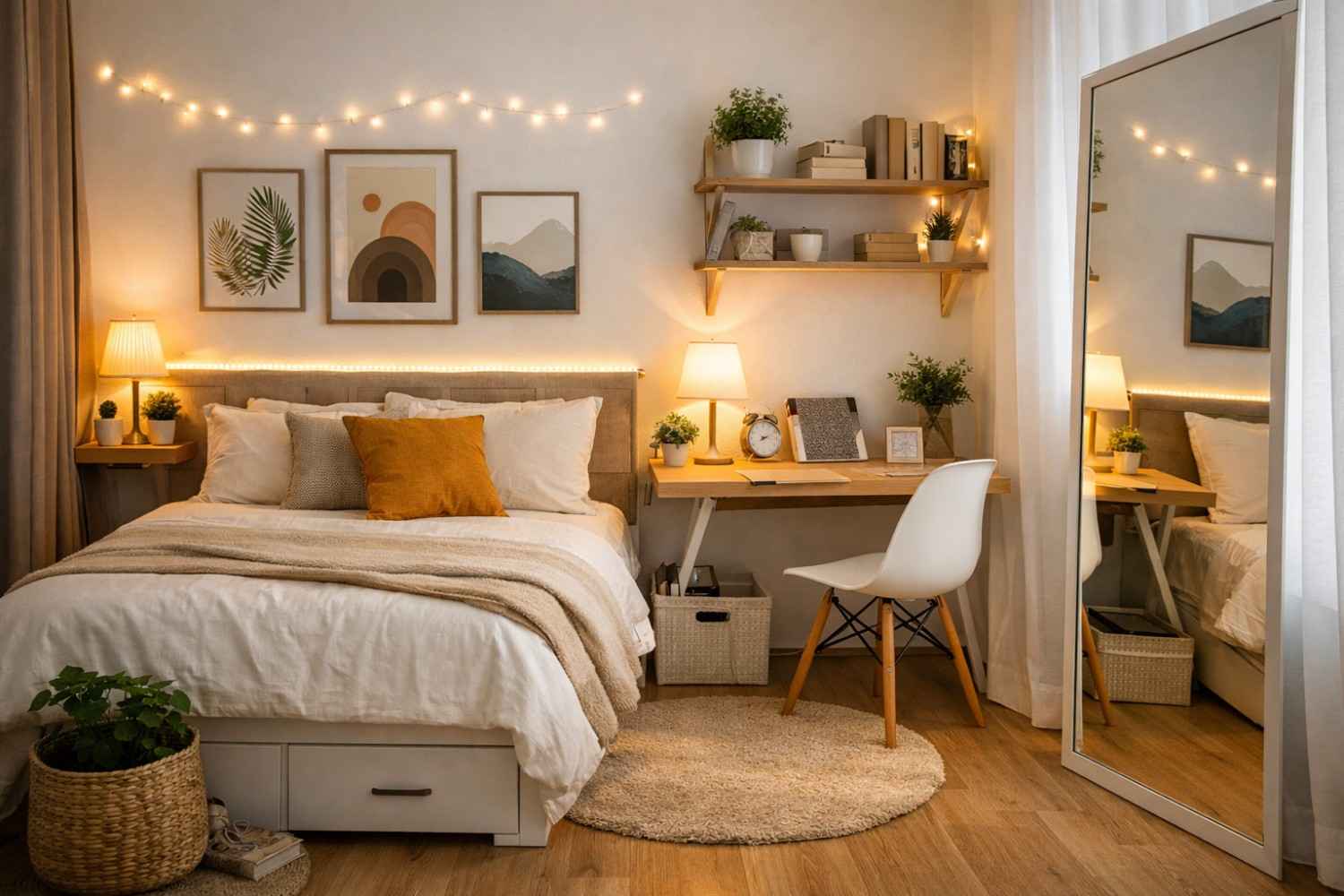
Use soft lighting (warm bulb, fairy lights, or a shaded lamp) for cozy evenings
-
Add texture: a rug, cushions, a knit throw—kids settle more easily
-
Include movement: a small indoor swing chair (if safe), a floor cushion, or a clear patch of floor
In Indian homes where space is tight, a foldable play mat or roll-up rug works beautifully.
Copy-and-use checklist: “Creative Room Essentials”
-
One calm base color + 2–3 accent colors
-
One wall for rotating art (pinboard/wire/board)
-
Low storage bins your child can reach
-
Maker station with light and a project tray
-
Reading corner with 8–12 books visible
-
Clear floor patch for building and pretend play
-
Easy cleanup rule: “Reset Zone” basket daily
Common mistakes (and how to fix them)
Mistake: Over-theming the room (everything matches, nothing adapts).
Fix: Keep theme in small items—bedding, decals, prints.
Mistake: Too much open shelving (looks messy fast).
Fix: Mix open shelves with baskets and closed storage.
Mistake: Buying “cute” furniture that isn’t durable.
Fix: Choose wipeable surfaces and strong edges; kids are tough on rooms.
Mistake: No display space for child’s work.
Fix: Create one “pride wall” and update it weekly.
Takeaway
A creativity-sparking kids’ room is less about décor and more about how the space supports daily life: easy access, flexible walls, simple storage, and zones that match how kids play. If you do nothing else, set up a maker station and an art display wall—you’ll notice the difference within a week.
FAQs (real parent questions)
Q1. What are the most important kids room decor ideas?
The best kids room decor ideas focus on zones for play, reading, creativity, and storage. This helps children use the room naturally without constant mess.
Q2. How can I decorate a small kids’ room creatively?
Kids room decor ideas for small spaces include vertical storage, wall boards, and toy rotation. These keep the room functional without clutter.
Q3. Are bright colors good for kids’ rooms?
Bright colors can be fun, but kids room decor ideas work best with calm base colors and colorful accents. This keeps the room playful yet soothing.
Q4. Why is storage important in kids room decor ideas?
Good storage makes cleanup easy for children. When kids manage their own space, play becomes calmer and creativity lasts longer.
Q5. How do kids room decor ideas support creativity?
Flexible decor like art walls, maker stations, and open floor space encourages children to draw, build, imagine, and express ideas freely.
Read This Also: Outdated Decor 2026: Home Design Mistakes to Avoid & What to Use Instead